Friday, February 11, 2011

Watch out! Valentine's Day is coming!! Don't loose your LOVE!

Valentine’s Day is coming. It is one of the most romantic and exciting day of the year for all ages. However, there will be many “lost hearts” in the ocean.

Please read my blog from the last year right after Valentine’s Day. I picked up 16 hearts!
http://dance4oceans.blogspot.com/2010/02/happy-valentines-day-this-love-will.html
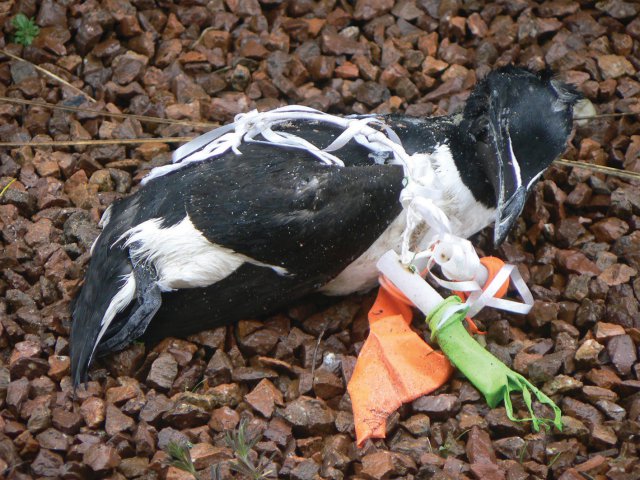
Estimates that 100,000 marine mammals and turtles and 1 million sea birds die every year from ingesting or becoming entangled in marine debris, including indigestible plastic that blocks stomachs. Sea turtles and other wildlife have been found starved to death with latex balloons blocking their stomachs. Even an infant sperm whale was found dead of starvation as a result of ingestion of an inflated Mylar balloon which had lodged in its intestines.

Mylar balloons are commonly bought as Valentine’s Day gifts. It’s made from metalized nylon (plastic) that is not biodegradable. They are filled with helium so that they float in the air. Plastic will stay on earth for hundreds of years. If you let go of the strings, they will travel far, and some may become entangled in power lines or trees, and other may land on the sea and create a serious entanglement hazard to marine animals.

Most of latex balloons are made from a natural substance and will biodegrade over time. The Balloon Council says that latex balloon release is safe as long as they are released with no strings or ribbons attached. (http://www.theballooncouncil.org/myths-facts.html)
However, that is not true at all.
When balloon go to high altitude, they break into spaghetti-like pieces and retune to earth. That shape of broken balloons can look like sea jellies, which are a major source of food for many sea animals. Sea turtles, dolphins, whales, fish, and seabirds have been found with balloons in their stomachs. According to The Balloon Council, “regardless of the latex balloon’s ultimate form when it lands, it will decompose, forming a natural soil nutrient at the same rate as that of an oak leaf.” If this were true, it would take 6 months to a year for latex balloons to decompose! That is way long enough to harm animals in the ocean! Some study in North Carolina says that balloons exposed floating in seawater deteriorate much more slowly than those exposed in air. I have a few latex balloons attached on my “Plastic Trash Zombie” costumes since Oct. 2009, and they still keep their shape and elasticity, though they have become a little bit sticky.

Balloons bring people fantasy and dream-like feeling. They are festive and uplifting. While it is almost impossible to ban balloons, we can educate ourselves not to let go balloons. If we receive a floating big heart on this coming Valentine’s Day, let's graciously thank the sender. But after his/her sweet message is successfully delivered, pop each one of them with care and carefully depose them into a trash bag. Never release balloons in the air if you don’t want to let go your love.

By the way, The Balloon Council’s website shows this record to prove that balloon releases do not harm environment as much as other individual balloons do. I personally believe that this is pointless. Besides, they found 288 balloon pieces during one single beach cleanup! We have to do something, Mr. Balloon Council!

In one Florida-wide cleanup there were 288 balloons/balloon pieces found. Of these:

• 79 were water balloons (not used in balloon releases)
• 38 were too small to have been released
• 96 had strings/ribbon/thread attached (never used in a release)
• 2 were valved (never used in a qualified release)
• 3 were shaped (never used in a qualified release)
• 70 — less than 25 percent — might have been used in releases

Photos courtesy by Danielle Frechette (Northern Fulmar), the U.S. Fish & Wildlife Service (power line), Sara Bayles (burst balloon).


Thursday, January 27, 2011

SEA PULSE films delivered positive messages!

On January 22, Macdonald Productions and Dance 4 Oceans presented Sea Pulse films, a film festival style setting event at the Electric Lodge in Venice.

The event started with "Heart of the Ocean" and "The World Ocean-Trashed" filmed by a marine videographer, Bill Macdonald to summarize the marine debris issue to start the program.

Bill documented the research of Captain Charles Moore, founder of the Algalita Marine Research Foundation. Captain Moore was a special guest speaker who talked about the impact of plastic pollution in the ocean. At the Q&A, he answered the common questions that I get often such as "What about recycling?" or "What about biodegradable plastic?" Our society is always inventing new ways to fix the problems. We come up with something new, which could be a new problem. It may be better than the old problem at this moment, but is still a problem. Somebody invents biodegradable plastic. It's better than non-biodegradable plastic. However, it still clogs the drainages and kills animals because it does not degrade fast enough. We also collect recyclable plastic to recreate something else. However we spend lots of money to ship it to China (or other undeveloped countries) for cheap labor and the workers in the recycling process are literally living in plastic debris, inhaling or ingesting its toxins. We have to change our life style with plastic from the basic instead of the acute treatments.

SEA PULSE films also introduced some of local activists. In the film "Watershed Steward", Lenny Arkinstall, a wetlands steward, is documented removing tons of plastic trash from the San Gabriel River, Los Cerritos Wetlands and Alamitos Bay. He was a land developer. He was driving a luxury car and was one of the first people in California to have a cell phone. Lenny gave up that life style and started to volunteer to clean the wetlands by installing floating litter traps by hand. He and his dog in his little dinghy went out there and gather trash into the traps with a long stick. Los Cerritos Wetland Steward became an educational program for young and old, now, and they do monthly cleanups and restoration activities.

Team Marine was a group of eco-minded young activists from Santa Monica High School, lead by a marine biology teacher, Benjamin Kay. Among of their numerous accomplishments, Team Marine's latest contribution to public is a ban on single-use plastic bags in Santa Monica, which has just passed on Jan 25. By supporting Heal the Bay, the students appeared with plastic costumes and spoke out at the court. SEA PULSE showed their film, "The 10 R’s", which is a solutions program, produced, directed and staring Team Marine. The local spotlight continued with "The Majestic Plastic Bag", a ‘mockumentary’ by Heal the Bay introduced by a new generation of watershed activist Zack Gold who is a co-president of Heal the Bay Surfrider Club and a son of the president of Heal the Bay.

Lastly, I introduced a film of Dance 4 Oceans, "Whales die, Zombies Dance". The film described what zombies do in protest as whales are suffering from ingesting plastic debris. The film was followed by Plastic Trash Zombie dance. Of course, the zombies stole the show! Little future activists and all other dance enthusiasts lit the depressed audience's faces. SEA PULSE films ended with positive feeling so that we can all change our thinking after walking out the theatre.

Wednesday, November 3, 2010

Who wants to live forever? Even plastic doesn't.

This video makes me cry. It really does. Plastic is amazing. It's durable and beautiful. But who wants to live forever after being used, discarded, torn, broken, faded, melted, eaten, and buried. It's touched, grabbed, held, hugged, sucked, and  loved for a few seconds to a few hours, and it becomes a nuisance, a burden, and a murderer of millions. We created it and we don't know what to do with it any more. It reminds me of Edward Scissorhands. It's sad for the victims, but it's sad for plastic itself.

Somebody called it "Planet Trash". I almost said, "Trash Planet". But that's too cruel to both the planet and the trash. Maybe, TRASH is us, humans. We appeared on this planet and trash it and will disappear someday. like a plague. I hope we find vaccine before we are gone.


Saturday, October 16, 2010

How to make your Halloween ocean friendly

Halloween is right around the corner! It's fun, fun, fun!
Have you decided what costumes you are going to wear this year?

Halloween is the first exciting event to start the holiday season. We can't miss it. However, we produce so much trash every holiday party, especially plastic trash. Candy wrappers, candy bags, ornaments, plates, and utensils are mostly plastic. You use them once and toss them away. What a waste that is! Then, those small plastic trash can easily go to the ocean!

How do you make your Halloween ocean friendly? Just give up all? No. You still can have so much fun with trick or treat if you think outside of the candy box!

1.  Don't do last minute shopping and buy bags of candy wrapped in plastic. 
Make or bake fresh snack and put it in a bowl or a plate. Have kids pick/scoop it and put it in a paper bag. If you are too busy to make, buy sweet in bulk, or buy from a bakery. Some candy is in a paper box or wrapped in paper. Buy fruits and soda cans. Fruit comes with biodegradable skin and soda cans are recyclable.

2.  Carry a cloth/canvas reusable bag instead of a plastic shopping bag. Kids (and you) will be having too much fan and forget to recycle the plastic bag after the party. Most of Halloween bags are made of thin plastic and won't last long. Buy a durable reusable bag so that you can use it again and again. How about a pillow case? It did a great job when we were kids, didn't it? That's more traditional and give kids (and you) joy.

3.  If you are thinking about buying one of those molded plastic jack o lanterns and candy jars, remember that these specialty items are not recyclable, and require fossil fuels to make and transport. Use a real pumpkin, and Autumn flowers and leaves to decorate your house. After carving the pumpkin, you can eat, give it to animals/birds, or compose it.

4.  Don't use Silly String. I know it's fun. But it is made from plastic resin and is not biodegradable. It clogs up sewer system if it goes into a storm drain. If it reaches to the ocean, fish and marine animals most likely eat it, mistaking it for food.

5.  Use recycled costumes. You just wear only one day a year but you don't want to wear the same thing every year. So why not exchange with your friends and neighbors? Be creative and make your own. How about a Plastic Trash Zombie? Put all the "guilty" non-recyclable plastics from the past onto your clothes and have fun! Make sure that you DO NOT buy candy in plastic in order to make your costumes!

Monday, September 27, 2010

The 3 R's - Reduce Reuse Recycle,

Last Saturday was the Coastal Cleanup Day. To give applause to volunteers, we danced to my favorite song, Jack Johnson's "The 3 R's - Reduce Reuse Recycle" at Santa Monica beach. It is a fun song and always makes me smile.
While dancing, I was thinking about the lyrics.

If you're going to the market to buy some juice
You've got to bring your own bags and you learn to reduce your waste
And if your brother or your sister's got some cool clothes
You could try them on before you buy some more of those
Reuse, we've got to learn to reuse
And if the first two R's don't work out
And if you've got to make some trash
Don't throw it out
Recycle

When I talk to someone about plastic pollution, about a half of people would proudly say, "I cut 6-pack rings before toss them.", "I buy/use biodegradable plastic", or "Oh, I always recycle." Yes, thank you, people. Those are nice. At least, it's nice to know that some people are conscious about plastic pollution. However, those actions are not enough to save the ocean, believe or not.

Cutting 6-pack rings prevent small animals from getting stuck in the rings. This information came out in the late 1970s when the environmentalists started to raise awareness of marine debris. It is true that birds and turtles can get caught in them and die, but between 1988 and 1998, U.S. cleanups uncovered 1,089 instances of animal entanglement, and only 72 (7 percent) involved six-pack rings. The rest, of course, was cause by other plastic debris.

Since 1989, under federal law, six-pack rings have been 100% photo-degradable(Photo-degradable plastics have a sun-sensitive component added that triggers a physical disintegration when exposed to sunlight). So, it is not really necessary to cut the 6-pack rings because they will break down to pieces in a few month anyway. (See Hi-Cone)

Does it mean that 6-pack rings are safe? No.
When plastic breaks down to pieces, it becomes more problematic. The small pieces of plastic mimic food. Those colorful plastic pieces look like krill, jellyfish, or fish eggs to birds, fish, and marine mammals. Plastic can suffocate them or block their digestive track. Plastic also absorbs toxic chemical materials such as PCB and DDT in the water and transfer them to animals.

If photo-degradable plastic is not good, is biodegradable plastic good? No.
Many people recently use biodegradable plastic bags, dog poop bags, food containers, or even diapers. But unless it is taken to a composting facility, biodegradable plastic will not biodegrade easily. If you toss your biodegradable plastic in a non-biodegradable plastic trash bag, it will be carried to a regular landfill and stay for 100s of years without breaking down.

So, the best thing is to recycle, right? No.
The carbon-footprint study, titled "PET’s carbon footprint: to recycle or not to recycle" found that in communities with limited infrastructure, recycling a plastic bottle can actually result in a bigger carbon footprint than simply throwing it in a landfill. The study concludes that the curbside take-back systems are no better than landfill. From a carbon-emissions standpoint, it would be just as well to bury used bottles as to recycle them. However, when plastic are buried, it leach harmful chemicals into the ground and potentially polluting the soil and water.

Should we reuse plastic items? No, not always.
You can reuse it as long as you don't put food in it. But if you put food or water, unless you wash and dry it properly, it may grow bacteria. You definitely do not want to heat plastic because it leach toxic chemicals.

Oh my. Is there any bright side of this story? Unfortunately, no.
Plastic will stay almost forever and keep harming animals and humans.
What we should do is to "Refuse" to buy/get single-use plastic.
Next time when I dance to "The 3R's", I would switch "Reuse" to "Refuse" for the 3 R's for plastic pollution since the 4 R's don't go with the rhythm.

We've got to learn to
Refuse, Reduce, Recycle
Because three it's a magic number
Yes it is, it's a magic number

It's still such a fun song to dance! I love it!
Thanks to Jack Johnson for making this song!